

Quick links
> Home
29 Sep 2026 (Intake closed)
Apply by: 15 Sep 2026
Studies in the Biology of Disease 29/09/2026 USSKAT-30-2
Frenchay
Attendance dates: 29 Sep 2026 (Module runs face-to-face on our Frenchay campus, Tuesday mornings 09:00 - 12:30 through semesters 1 and 2.)
Course overview
Modules can be offered either individually or collectively if you have had your first degree evaluated by the IBMS and require further Top-up studies in order to complete the educational requirement for IBMS accreditation.
On successful completion of this 30 credit module, Studies in the Biology of Disease, you will be able to:
- review the mechanisms responsible for disease and disorders in the human body.
- demonstrate knowledge of the pathophysiology, investigation and diagnosis of selected diseases.
- develop the ability to integrate the specialist areas of biomedical science into the context of a coherent case study approach.
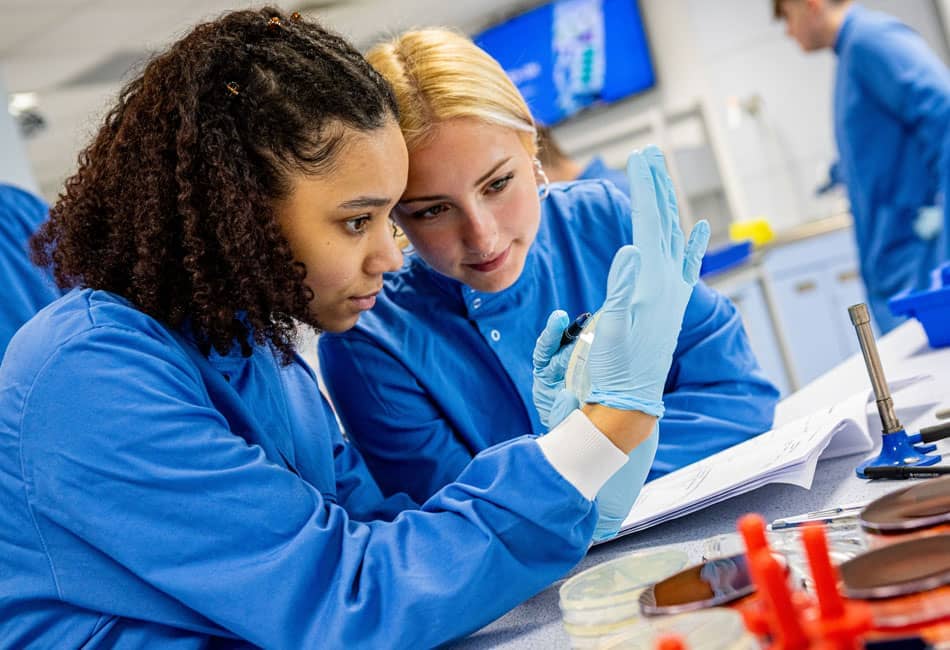
- perform appropriate experiments and analyse data in practical sessions within the context of a clinical case study.
For an applicant looking to top-up an undergraduate degree to obtain an Institute of Biomedical Science (IBMS) or Health and Care Professions Council (HCPC) accreditation, please refer to the Biomedical Science module top-up for IBMS/HCPC accreditation page for more information.
Careers / Further study
This module can contribute towards the PGCert Health and Social Care, MSc Clinical Practice, and the Professional Development Awards. If you have any queries, please contact the Professional Development team using the enquiry form below.
Content
You will carry out case studies selected to illustrate the multifactorial and integrated nature of disease and its laboratory investigation. The module syllabus typically includes:
Homeostasis and malignant disease
- Central importance of homeostasis, mechanisms of control and the consequences of failure.
- Concepts of disease and normality, reference ranges.
- Mechanisms of cancer development at a cellular level, haematological disorders and diagnosis and treatment.
Cellular pathology
- Microscopic analysis of cells and tissues.
- Preparative processes for microscopical analysis of tissues and cells.
- Cell and tissue stabilisation.
- Histological and cytological features of the disease state.
- Clinical laboratory applications of cellular pathology; its role in diagnosis, prognosis and prediction.
Clinical biochemistry
- Diagnosis, screening and monitoring of disease through qualitative and quantitative evaluation.
- Diagnosis of liver, cardiac diseases and endocrine disorders.
- Drug toxicity and drug monitoring.
Haematology and transfusion science
- Haematology of normal and disease states, haemoglobinopathies and thalassaemias, anaemias, leukaemias and thrombosis.
- Laboratory investigation of disease states
- The role of the laboratory in monitoring of therapy.
Immunohaematology
- Identification of blood group antigens, methods for antibody detection and compatibility testing and safety aspects of blood transfusion.
Medical microbiology
- Relationship between host and microorganisms, mechanisms of pathogenicity, transmission and response to infection, factors influencing susceptibility, epidemiology, laboratory investigation of infectious diseases and vaccination.
Immunology
- Structure and function of the immune system, innate and acquired immunity, inflammation, tolerance.
Professional/generic aspects
- Requirements for registration, the HCPC and IBMS.
- Standards that govern pathology laboratory practice, health and safety, ethics.
- Quality assurance and quality control, sources of error.
Study time
The contact hours (72) are distributed as follows:
- 18 lectures (3 hours per lecture) = 54 hours
- 6 laboratory sessions (3 hours per practical) = 18 hours.
Module runs face-to-face on our Frenchay campus, Tuesday mornings 09:00 - 12:30 through semesters 1 and 2. Module start date for this academic year listed above.
Accredited by

Why choose UWE Bristol?
UWE Bristol works closely with employers and industry partners, ensuring that course content reflects today’s challenges, emerging trends, and the skills that organisations are actively seeking.
Many courses are offered part-time, online, or in blended formats, making it easier to balance learning with work and personal commitments without compromising depth or quality.
Teaching staff often come from professional backgrounds, bringing practical insight, case studies, and hands-on expertise that help learners apply knowledge directly to their careers.
Learners benefit from career guidance, mentoring, and access to a vibrant network of professionals, alumni, and industry events that can open doors to new roles or progression.
UWE Bristol is known for its emphasis on practical skills, innovation, and employability, giving learners added confidence that their qualification will be respected and valuable in the workplace.
Course details
Course leader
Dr Chris Moore
Course delivery
Module runs face-to-face on our Frenchay campus, Tuesday mornings 09:00 - 12:30 through semesters 1 and 2. Module start date for this academic year listed above.
Downloads
Prerequisites
Entry requirements
You must have completed Infection and Disease (USSKA7-30-1)
If you are an international student please contact us prior to applying. You may need to supply further information, for example, evidence of English Language Proficiency or evidence of relevant qualification or experience.
Course fees
£2,448.00
26/27 international fee for this module is: £4,250
Make an enquiry
Make an enquiry